
The 6Green project aims to conceive, design, and realize an innovative service-based and holistic ecosystem, able to extend “the communication infrastructure into a sustainable, interconnected, greener end-to-end intercompute system and promote energy efficiency across the whole 5/6G value-chain.
The ultimate objective is to enable and to foster 5/6G networks and vertical applications reducing their carbon footprint by a factor of 10 or more.
Business Models for 6Green
Achieving a “win‑win green‑economy business” across the 5/6G value chain requires business models that make sustainability measurable, contractable and monetisable. Our analysis, grounded in D6.2/D6.3, the Exploitation and Market Analysis questionnaires, and the UC‑oriented objectives, translates 6Green’s Service‑Based Architecture (SBA) and cross‑domain enablers—Edge Agility, Green Elasticity and Energy‑Aware Backpressure—into market‑ready value propositions anchored in Decarbonization Service Agreements (DSA) and KVI/KPI commitments.
We structure the portfolio along the three exploitation models defined in WP6. First, a research exploitation model that reuses algorithms, models and trial results to accelerate TRL, standardisation (3GPP SA2/SA5, ETSI ISG NFV/ZSM/MEC, ITU‑T SG5) and ecosystem visibility. Second, a technological exploitation model that integrates 6Green components (observability for Energy‑Aware Backpressure, Edge Agility/Green Elasticity mechanisms, green AI‑driven decision policies) into existing product and service stacks, improving energy efficiency, interoperability (multi‑vendor APIs) and compliance. Third, a (pre‑)commercial exploitation model that stages “green‑by‑design” offerings over a 3–5 year horizon with licensing, managed services/aaS, and consulting/training, preparing assets for market adoption.
The commercial nucleus is the DSA: a contract vehicle that binds sustainability KVI/KPI targets to service delivery and pricing. Energy‑Aware Backpressure provides traceable, per‑slice/per‑vApp attribution of energy use and carbon footprint, enabling DSA clauses based on measurable thresholds—standby ≥ 58%, offload ≥ 33%, renewable energy share ≥ 75%, ≥ 4 green AI policies evaluated. Edge Agility and Green Elasticity underpin OPEX/CO2 reduction by moving and scaling functions “only when, where and for the time needed,” consolidating workloads, and exploiting hardware offload and low‑power modes.
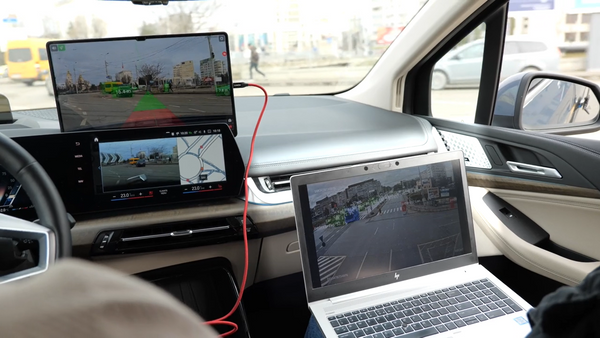
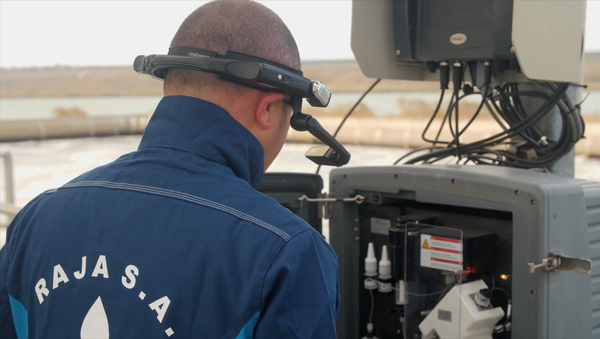
Market‑facing offers align with the three use‑cases. For UC1 (Critical Operation Maintenance), a Resilience‑as‑a‑Service model packages tiered DSA/SLA bundles where pricing reflects continuity KPIs and carbon/energy performance under energy‑constraint scenarios, integrating renewables and green AI policies. For UC2 (Energy‑Efficient AR Remote Assistance), an AR Edge‑as‑a‑Service model combines per‑user/session subscriptions with dynamic tariffs indexed to end‑to‑end energy consumption, backed by latency/QoE and efficiency KVIs, with on‑demand edge media/compute and elastic standby/offload. For UC3 (Zero‑Carbon Clientless Virtual Enterprise DaaS), a Zero‑Carbon DaaS model offers enterprise contracts with differentiated pricing by renewable mix, BYOD/HTML5 clients, private network/slicing integration, and performance adaptation via in‑network offloading.
Go‑to‑market depends on a federated partnership fabric—operator–vendor–cloud/edge–SME–academia—leveraging standardisation touchpoints (3GPP/ETSI/ITU‑T), industrial fora (GSMA/NGMN/6G‑IA) and validation on the SLICES testbed. Questionnaire feedback confirms key adoption drivers: 3–5 years to market‑readiness aligned with 5G roll‑out windows; interoperability via standard APIs and multi‑vendor support; GDPR/data sovereignty compliance; and competitive differentiation through demonstrable energy efficiency and CO2 reduction.
Monetisation blends recurring services (managed optimisation, operations aaS), technology licensing (analytics, Energy‑Aware Backpressure, green AI decision policies), and advisory/training, with IPR routes where appropriate. Pricing models incorporate DSA‑indexed clauses (e.g., bonuses/penalties against renewable share or standby/offload levels), tiered “green premium” options and usage‑based charges linked to measured energy per slice/vApp.
Commercial success will be tracked through a concise KVI/KPI set: network and vApp energy efficiency, carbon footprint reduction, renewable share, QoE/latency/reliability, customer adoption, TCO/OPEX impact and time‑to‑integration—ensuring that sustainability outcomes are contractable and auditable.
Our contribution distils WP6 business models into DSA‑anchored, KPI/KVI‑driven offerings, maps 6Green assets (Edge Agility, Green Elasticity, Energy‑Aware Backpressure, green AI, SBA) to the three exploitation models and UC‑specific value propositions, and defines monetisation and partnership pathways consistent with standardisation and regulatory requirements. We also align the exploitation roadmap to the 3–5 year market window, highlighting risk mitigations (integration complexity, workforce upskilling) and embedding observability to enable pricing based on measurable energy and carbon performance.